One of my favourite Georgian toasts is the toast to our memories: მოგონებებს გაუმარჯოს mogonebebs gaumarjos! Skål för våra minnen! Beautiful, warm, or sometimes sad memories fill our minds, and now, approaching the end of the year 2023, we can look back on many happy and interesting events and memories.
RUCARR in the spring
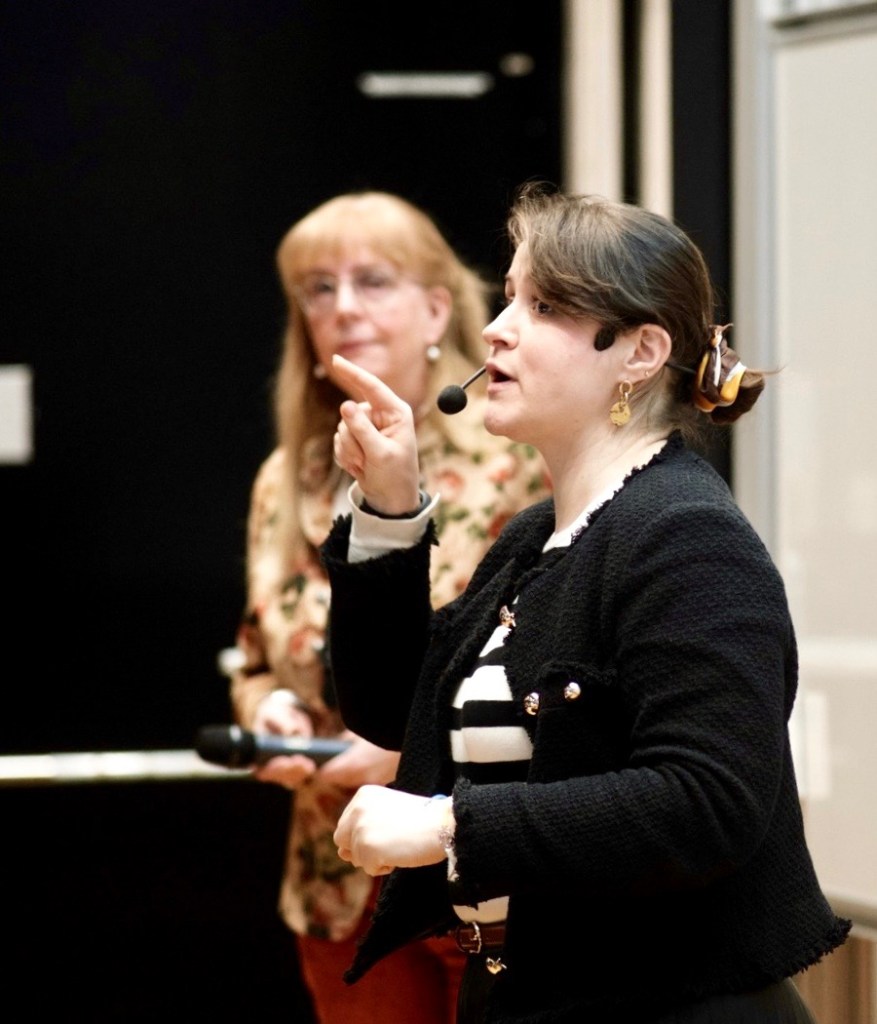
On March 2, a special and memorable event took place at Malmö University. It was a great honor for our research platform Russia, Ukraine and the Caucasus Regional Research (RUCARR) to be part of organizing the lecture with Oleksandra Romantsova, a front figure of the Ukrainian organisation Center for Civil Liberties that was awarded the Nobel Peace Prize in 2022. It was also an honor to act as moderator during her lecture.

Later in the same month, I enjoyed meeting with members of RUCARR’s advisory board and other colleagues in Tallinn. Chair of RUCARR’s advisory board, Sweden’s ambassador to Estonia, Ingrid Tersman (center), graciously hosted us at Sweden’s Embassy to Estonia in Tallinn’s Old Town. During the visit we also had a very interesting meeting at the NATO Cooperative Cyber Defence Centre of Excellence in Tallinn.
One year into the war – February 24, 2023
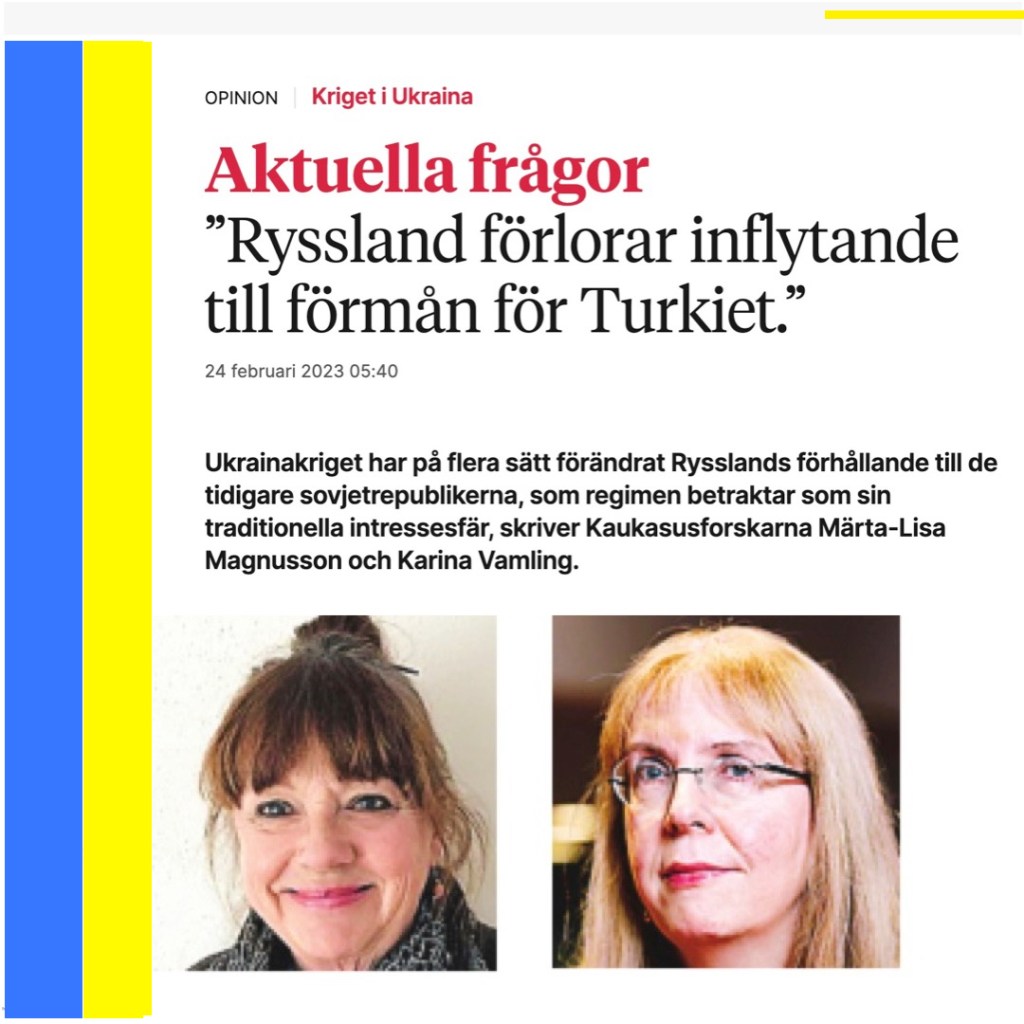
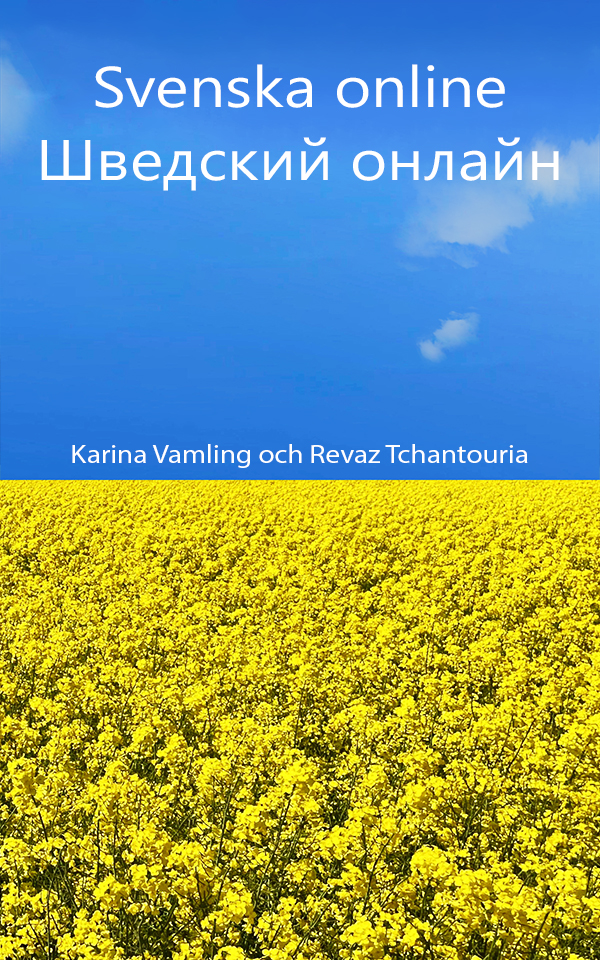
In the article Russia loses influence in favor of Turkey (Swedish daily paper Sydsvenskan, February 24, 2023) colleague Dr. Märta-Lisa Magnusson and I discuss the effects of Russia’s war in Ukraine on Moscow’s relations with other former Soviet republics, especially in the South Caucasus. Another article with co-author Märta-Lisa Magnusson Russia versus Turkey in Nagorno-Karabakh is written against the dramatic development in the Nagorno-Karabakh conflict and was published in the popular science journal Forskning & Framsteg (2023-09-26). https://fof.se/artikel/ryssland-mot-turkiet-i-nagorno-karabach/ One more Ukraine-related publication that appeared in 2023 is an e-book for smartphone: “Svenska online för nybörjare – Шведский онлайн для начинающих”. It has been a small sideproject to create an online course in Swedish, primarily for migrants from Ukraine. There are many interactive exercises and audiofiles. Co-author is Revaz Tchantouria, cover by Albert Vamling.
Informing about our Caucasus Studies

It was interesting to present our research platform RUCARR and Caucasus Studies to alumni and MA students at the IRES Institute for Russian and Eurasian Studies at Uppsala University, by invitation from TSARES, the student association of Russian and Eurasian studies (photo: together with Fabian Modin, vice chair of the association). Thank you for the invitation, great initiative!
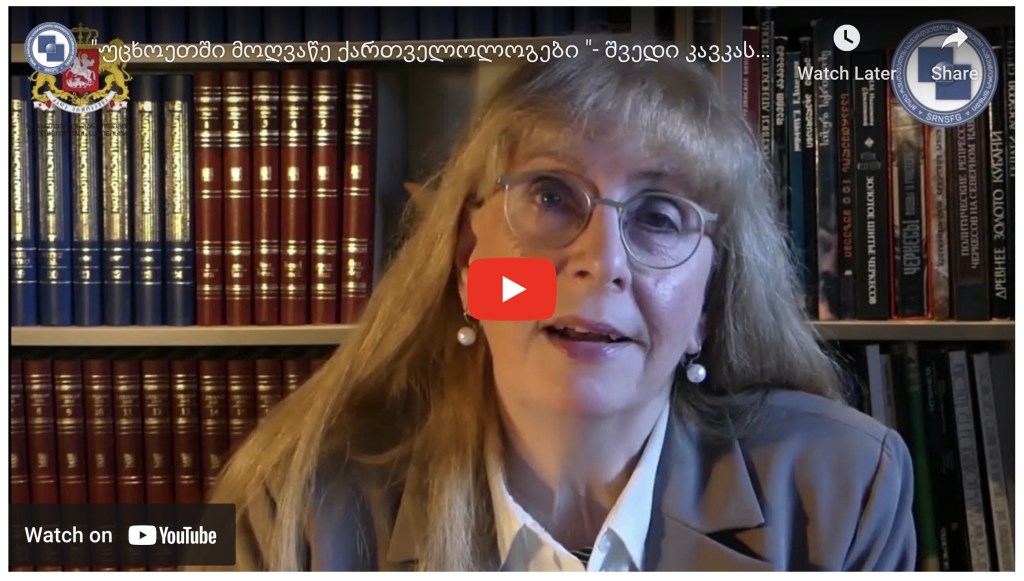
In connection with the celebration of the Day of the Georgian Language, Shota Rustaveli National Science Foundation of Georgia published the video Kartvelologists Abroad – Swedish Caucasiologist and Kartvelologist Karina Vamling. In this video, I briefly talk about our online course in Georgian at Malmö University – about our students and how the course was developed – together with colleagues and lecturers Dr. Manana Kobaidze and Dr. Revaz Tchantouria, both at Malmö University.
Another interview on the topic of higher education in Sweden and Georgia appeared on Ajara TV in Batumi, also together with Revaz Tchantouria, representing Malmö University. Many thanks to producer Mari BU Bolkvadze, Ajara TV.
International conferences in the fall

It was very interesting to participate in the symposium “Digital Caucasiology – a Change of Paradigm?” at Frankfurt University, on October 4-7. The symposium spanned several generations of caucasiologists, from senior scholars to young PhD candidates. My presentation was based on fieldwork conducted in Batumi, where I was interested in a close study of how the multilinguality of the city is realised in the public space: An exploration of the linguistic landscape of Batumi: The case of Luka Asatiani Street.

The next conference was the 2nd International Linguistic-Anthropological Congress of Caucasologists, held at Tbilisi State University on October 17-19. The congress is unique in bringing together scholars from both the North and South Caucasus and from abroad. I had a joint presentation with Manana Kobaidze, entitled Field study of language use among Svanetians in the late 1990s. Photo right: Together with organizer Prof. Merab Chukhua, Head of Department of Caucasiology, Tbilisi State University.
The third October event was the roundtable “The Caucasus between Turkey and Russia” on October 21, at the annual meeting of the Research Collegium of the Swedish Research Institute (Istanbul), hosted by RUCARR, Malmö University. Colleagues and co-panelists were George Mchedlishvili, Natia Gamkrelidze, Kamal Makili-Aliyev and Michel Anderlini. My perspective on the topic was “The Caucasus in Turkey.”
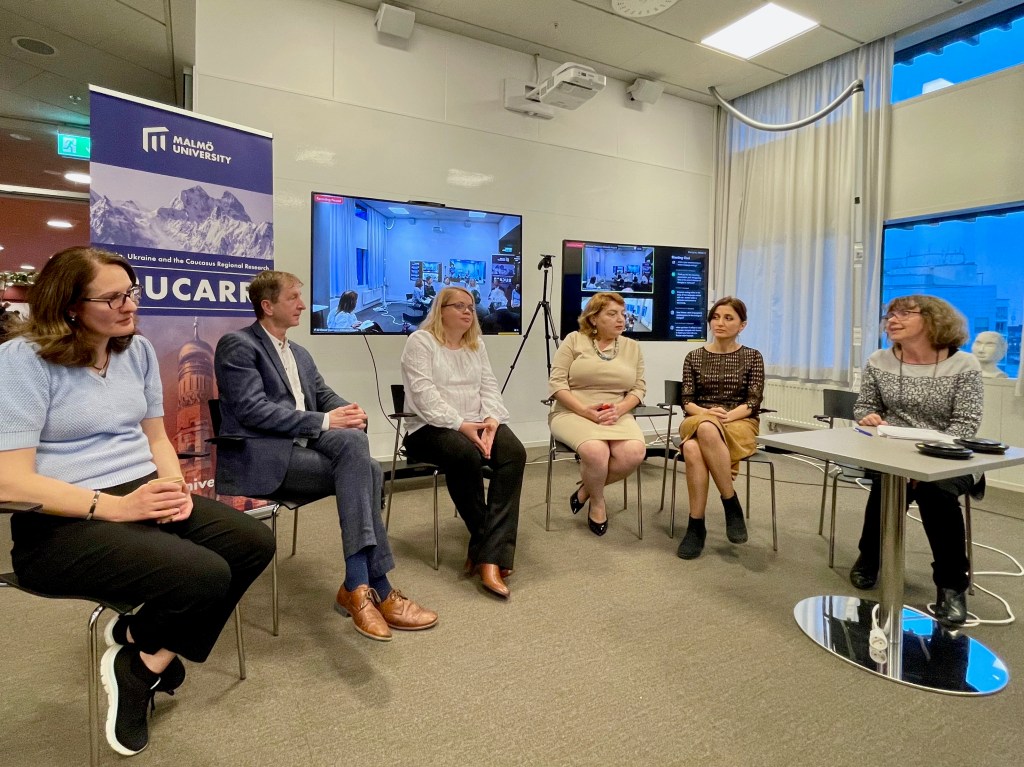
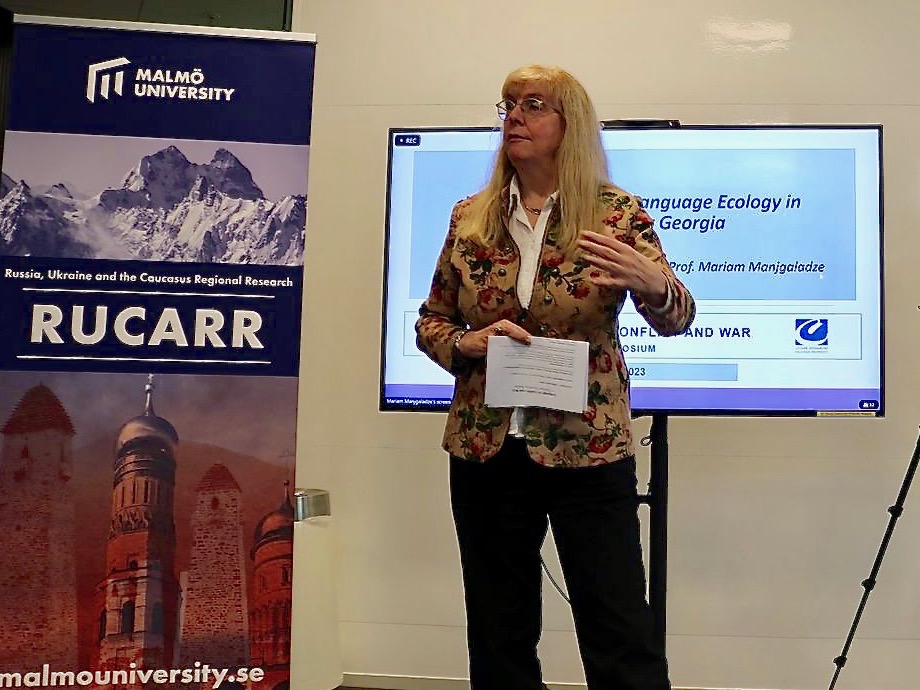
It was a great pleasure for me to host the RUCARR Symposium “Language in Conflict and War – Ukraine, Caucasus, Russia”, on November 6-7 together with Prof. Bo Petersson and Dr. Manana Kobaidze. The event was conducted both on campus and online with papers on languages in conflict in Ukraine, Georgia, the North Caucasus and Central Asia. See Abstracts and photos from the event. Photo from the concluding roundtable discussion with Lidia Zhigunova, Andrey Makarychev, Nadiya Kiss, Mariam Manjgaladze, and Maka Tetradze. Moderator: Prof. Barbara Thörnqvist-Plewa.
Following the conference, I was contacted by historian and journalist Mairbek Vatchagaev, who invited me to his podcast at Radio Liberty/Free Europe. The interview (in Russian) is available on: Youtube https://youtu.be/QjBbOJOEyLo?si=vHQgId8g1e4yUw2T
Two important cultural events

There are two special cultural events of this year, that have been particularly memorable and important to me. In March this year the exhibition Forbidden Art was organized at the Georgian National Gallery in Tbilisi for the Georgian avantgarde sculptor Karlo Grigolia (1927-2014). I have followed Karlo Grigolia’s work since the late 1980s and know him well. This was a milestone in the recognition of his artworks, and was so important and well deserved. (Photo: Karlo Grigolia’s portrait of me; visiting the exhibition together with artist Leri Chanturia).

Sabina Chantouria’s new song Echoes https://orcd.co/rn6m926 was released in the summer, following a long and unique creative process, that began with a recording session in Los Angeles a couple of years ago. The song goes with the magnificent music video https://youtu.be/nlefEzE_T0U . It has been so interesting to follow the creative process, of both the song and the music video.
A historical meeting

In mid September I had a meeting that connected to an important point in Georgian history. In 1920, towards the end of Georgia’s short period of independence, the gentleman on the painting (right) and his wife spent two months traveling in Georgia. The couple spent most of the time in Batumi, but also visited Sokhumi, Tbilisi and further all the way to to Baku. I had the privilege of meeting with his 96-year-old son, who told the story of his parents. Many notes and letters have survived in the local archives.
In Memoriam
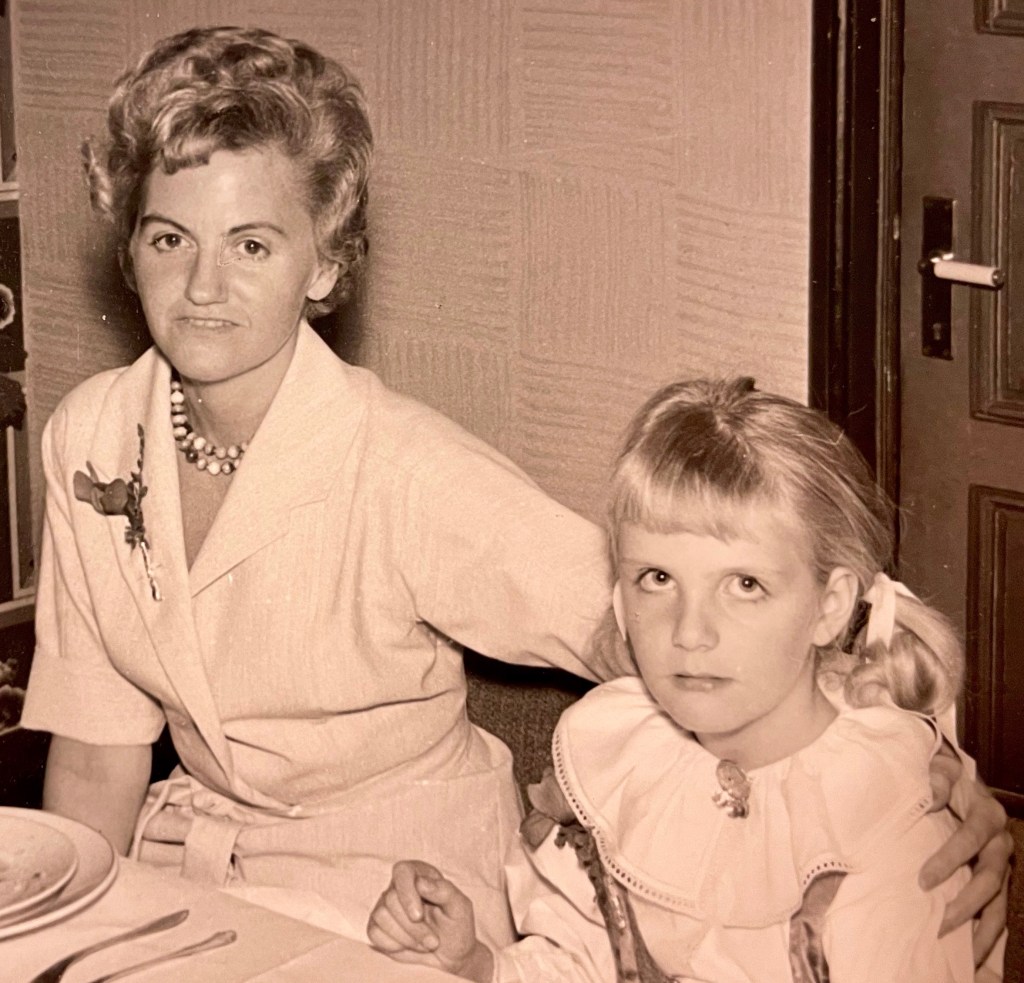
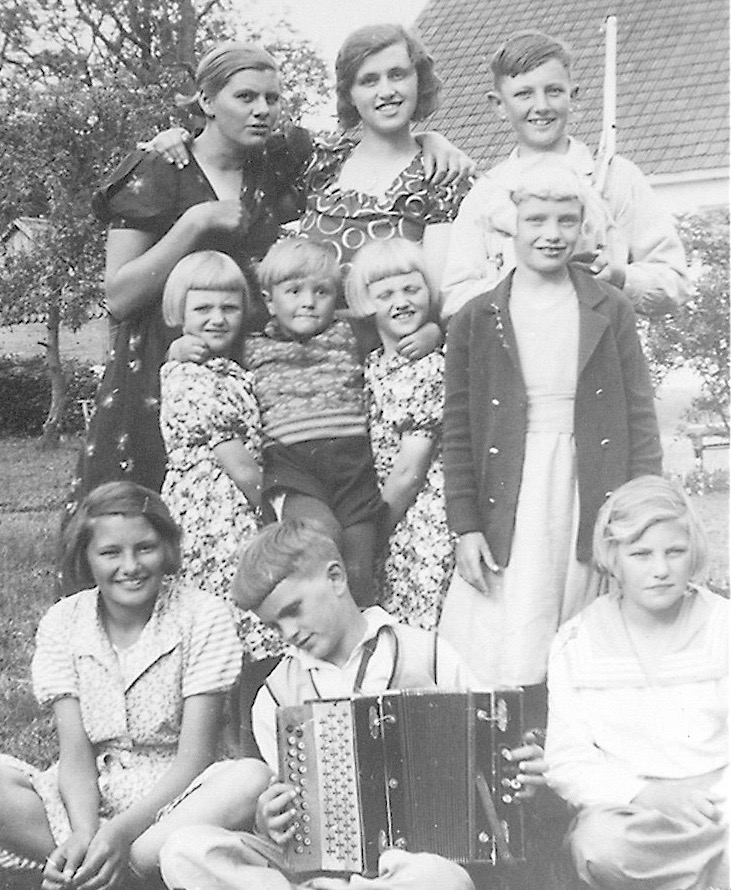
On one of the first days of the year, my beloved aunt Ruth left us, and shortly after this, also my uncle’s wife, Gerd. Aunt Ruth and Aunt Gerd were the last representatives of my mother’s generation of thirteen brothers and sisters. Most of the siblings are gathered in the photo to the right. The year is 1936. Photo: Ruth is the central twin girl, carrying the youngest brother, who would marry my aunt Gerd. It’s my mother’s tenth birthday; she is standing to the right in a dark jacket.

Before 2023 came to an end, we got the sad news that another close relative had passed away, my dear sister-in-law Marina. Photo taken in her hometown Sokhumi, 1989.
Season’s greetings

We celebrated a warm and peaceful Christmas in 2023. Wishing all a happy, productive, interesting, and, not the least, healthy upcoming New Year 2024. Let us hope that next year will be the year when peace comes.
Categories:Archive

 Karina Vamling
You must be logged in to post a comment.