It’s a pleasure to share my recent contribution to The Conversation UK: ”I was in Georgia in the late 1980s: I observed how tradition survived harsh Sovietisation and rapid transformation.” The full text is available here. Many thanks for the invitation to this forum.
In the paper I write about the situation I experienced in Georgia during my fieldwork in the late 1980-s with special focus on how many old Georgian traditions had been maintained despite decades of Soviet propaganda — the institution of hospitality, the supra and tamadoba, traditional gender roles and religious practices. The text includes many links and original illustrations. It was also an important period in the struggle for Georgia’s independence from the Soviet Union, which is also highlighted in the paper:
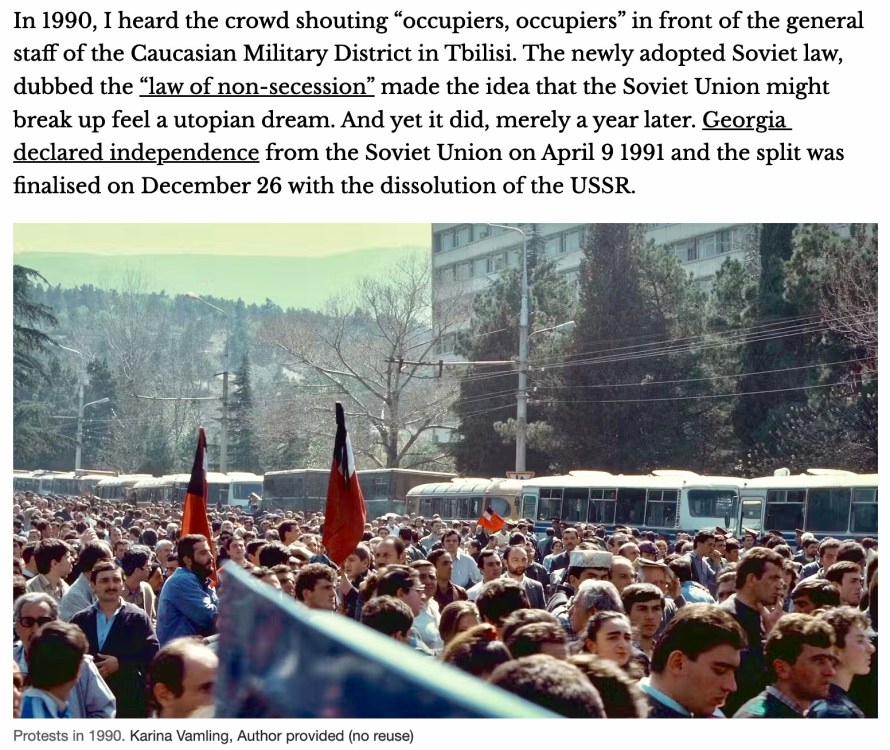
In 1990, I heard the crowd shouting “occupiers, occupiers” in front of the general staff of the Caucasian Military District in Tbilisi. The newly adopted Soviet law, dubbed the “law of non-secession” made the idea that the Soviet Union might break up feel a utopian dream. And yet it did, merely a year later. Georgia declared independence from the Soviet Union on April 9 1991 and the split was finalised on December 26 with the dissolution of the USSR. (Karina Vamling, The Conversation, April 10, 2026)
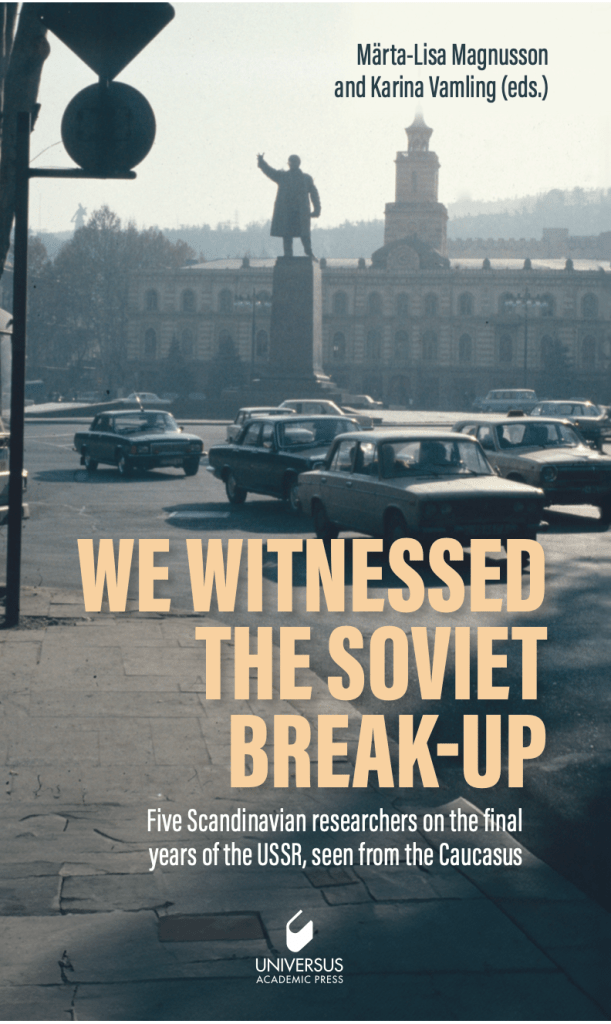
The paper is partly based on my chapter “Four years that changed Georgia’s identity” in our new anthology “We witnessed the Soviet Break-up. Five Scandinavian researchers on the final years of the USSR, seen from the Caucasus,” co-edited with Märta-Lisa Magnusson.
Categories:Publications

 Karina Vamling
You must be logged in to post a comment.